
Interpretation
Concept Card #02.01.03
This concept informs Barbara's research on strategic uncertainty and innovation ecosystems.
Definition #02.01.04
What Is Interpretation?
Interpretation is the process through which people and organizations assign meaning to information, events, and signals.
Weak signals do not contain fixed meaning on their own. The same development can be interpreted as irrelevant, temporary, threatening, promising, operational, or strategic. That depends on existing assumptions, experiences, priorities, and context.
Interpretation therefore shapes not only how organizations understand change, but also whether change is recognized at all.
Weak signals do not contain fixed meaning on their own. The same development can be interpreted as irrelevant, temporary, threatening, promising, operational, or strategic. That depends on existing assumptions, experiences, priorities, and context.
Interpretation therefore shapes not only how organizations understand change, but also whether change is recognized at all.

Characteristics
Example Case #02.02.03
Facebook: the good, the bad, and the ugly
n its early years, Facebook was widely interpreted as a technology platform that helped people connect, communicate, and share information more openly. Rapid growth, high engagement, and viral content were largely seen as positive indicators of innovation and platform success. Features such as personalized feeds, recommendation algorithms, and frictionless sharing helped increase user activity and advertising revenue, reinforcing the belief that the platform was creating social and economic value.
At the same time, some researchers and critics interpreted the same developments differently. They warned that engagement-driven algorithms could amplify emotional content, misinformation, political polarization, and social fragmentation. Although many of these signals were already visible in the form of outrage cycles, echo chambers, and viral disinformation, their broader societal implications were initially underestimated by many actors. The Facebook case illustrates how the same information can lead to very different interpretations depending on assumptions about technology, incentives, and human behavior.
At the same time, some researchers and critics interpreted the same developments differently. They warned that engagement-driven algorithms could amplify emotional content, misinformation, political polarization, and social fragmentation. Although many of these signals were already visible in the form of outrage cycles, echo chambers, and viral disinformation, their broader societal implications were initially underestimated by many actors. The Facebook case illustrates how the same information can lead to very different interpretations depending on assumptions about technology, incentives, and human behavior.
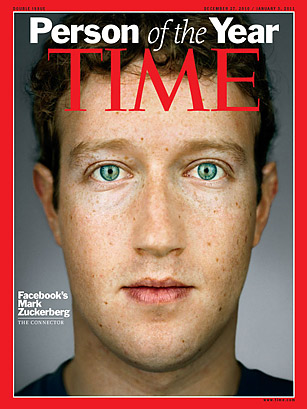
2010: the ignorant
Times named Zuckerberg person of the year. At age 26, Zuckerberg is the second youngest person to receive the honors.
2014: the good
Times portrayes Zuckerberg as a visionary leader who sees connectivity as both a business opportunity and a social mission.

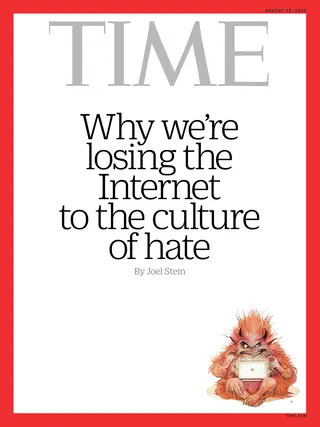
2016: the bad
Time argues that the same social media systems once praised for connecting people were increasingly amplifying hate and societal polarization.
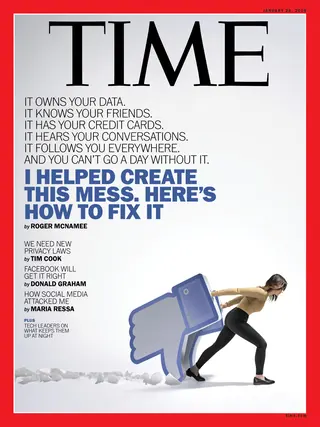
2019: the ugly
Time report on Facebook's addictive and polarizing algorithms, and how it's used for propaganda.
Field Note (to consider) #02.05.04
Strategic surprise often begins as strategically uninteresting information.
Metaphor
An Autumn Leaf
Where we see an autumn leaf that needs to be raked, a frog sees a shelter from the rain.
One item, multiple meanings, all correct. That is what organizations need to be able to deal with: the plural meanings of strategy information, when the organizational environment is uncertain.
One item, multiple meanings, all correct. That is what organizations need to be able to deal with: the plural meanings of strategy information, when the organizational environment is uncertain.
Exercise 02.06.05
What Would Have to Be True?
This exercise exposes: the hidden assumptions underneath strategic interpretation.
Choose one emerging development relevant to your organization (see example block).
If this development becomes strategically transformative,
what would have to be true for that to happen?
What assumptions make us believe this development is probably unimportant, temporary, or overhyped?
Choose one emerging development relevant to your organization (see example block).
If this development becomes strategically transformative,
what would have to be true for that to happen?
What assumptions make us believe this development is probably unimportant, temporary, or overhyped?
Example Block
Choose one emerging development relevant to your organization:
- AI
- remote work
- electrification
- demographic change
- automation
- synthetic media
Tips #02.07.03
How to Recognize Interpretation Quality
Effective filtering becomes visible through recognizable organizational behaviors:
- Multiple interpretations can coexist before conclusions are finalized
- Leaders openly question assumptions behind strategic decisions
- New information can change existing interpretations
- Contradictory information is discussed instead of ignored
- People distinguish observations from interpretations
- Different departments contribute to interpretation
- Uncertainty can be discussed without immediate certainty
- The organization avoids oversimplifying emerging change
- Leaders regularly revisit earlier conclusions
- Weak signals are explored before they become obvious trends
- Strategic discussions include second-order and systemic effects
- Alternative explanations are taken seriously
- The organization recognizes when old assumptions no longer fit reality
- Interpretation evolves as the environment changes
- Bad news and uncomfortable signals can safely move upward in the organization